AI Integration / AI Platform
Agent runtime steward
A workflow for turning incoming signals into context, recommended next steps, and human-reviewed actions.
Problem
AI-assisted workflows become risky when they jump from input to action without clear boundaries. The useful system is not an inbox summary or a chatbot. It is a runtime pattern that can decide what needs attention, prepare the right context, and stop at the correct human approval point.
What I built
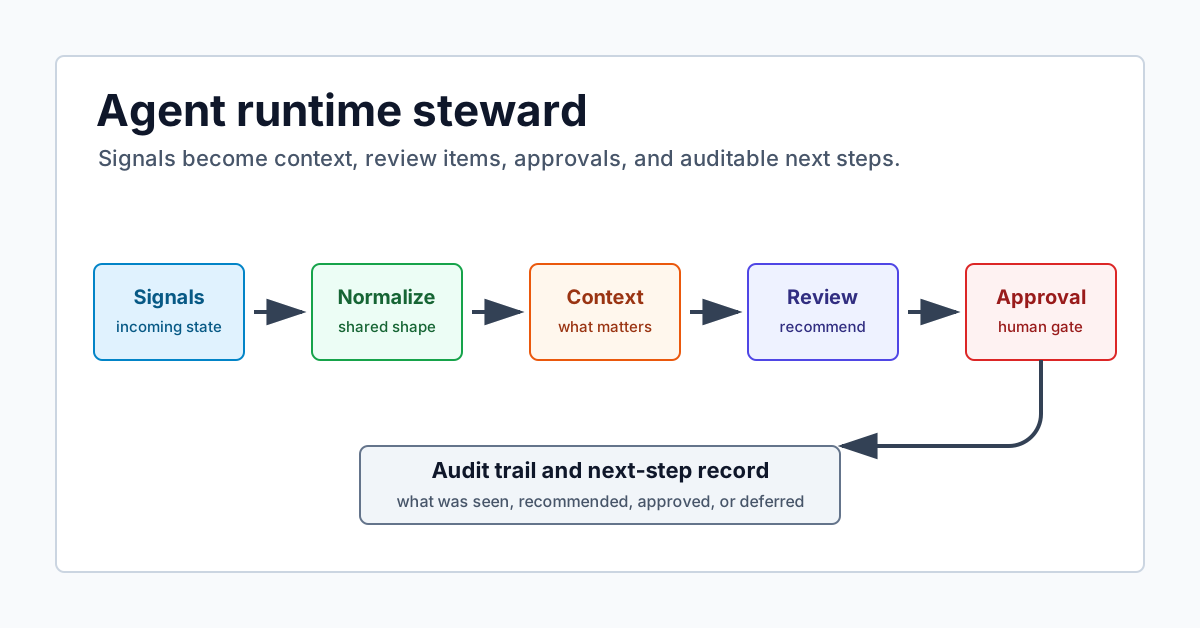
I built an agent runtime steward pattern for signal-to-decision work. Incoming signals are normalized into a shared queue, enriched with relevant context, reviewed by an AI-assisted reasoning step, and turned into next-action drafts or audit records.
The system is designed around restraint: it can prepare decisions, explain why something matters, and leave a trace for review, while external actions remain gated by a human.
How I work
I separate input connectors from decision logic. That keeps the runtime portable: different sources can feed the same review flow without turning each connector into a separate product.
The core loop is simple: collect signal, normalize it, attach context, rank urgency, prepare a recommendation, wait for approval, and preserve a run record that another operator can inspect later.
What this demonstrates
This work demonstrates practical AI platform judgment: building agentic workflows with clear boundaries, human review, observable run records, and enough structure to improve the system without trusting agent output blindly.