Forward Deployed Engineering / DX
Operator cockpit and workflow tools
Cockpit-style views, work queues, verification gates, and evidence links for human plus AI work.
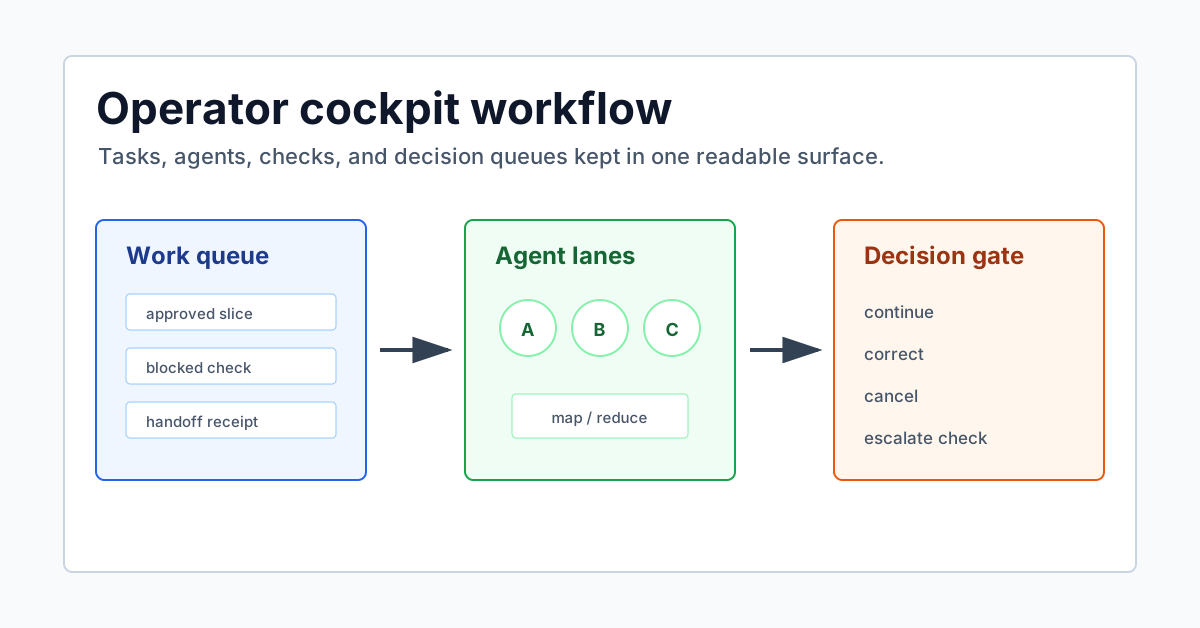
Problem
AI-assisted engineering creates a coordination problem before it creates a code problem. Multiple agents, sessions, repositories, prompts, verification logs, and task states can move in parallel. Without a cockpit, the operator loses track of what is real, what is blocked, what has evidence, and what is only an assistant’s claim.
What I built
I build operator cockpit patterns for human plus AI delivery: work queues, evidence links, verification gates, session handoff records, and control-plane views that make ongoing work re-enterable after context loss.
The goal is not to add another dashboard for decoration. The cockpit is a working surface for decisions: continue, correct, cancel, escalate verification, or hand work to another agent with enough context to avoid restarting from scratch.
How I work
I treat the operator as the owner of outcomes, not as a prompt typist. That changes the system design. A useful workflow surface has to show the current task, its source of truth, the latest evidence, the next gate, and the risks that still need human judgment.
In practice, this means pairing agentic developer workflows with boring controls: explicit status, durable artifacts, bounded scopes, verification receipts, and GitOps or task-json rails when work needs to leave the local session.
What this demonstrates
This work demonstrates AI Integration, developer experience, and platform thinking: designing tools that make autonomous work observable, reviewable, and reversible instead of treating agent output as a black box.
Next step
Review fit for similar work.
This is a public-safe summary. For hiring review, pair it with the CV and current availability before starting a focused conversation.