AI code review needs verification loops
Why AI code review should end in a check against the real system, not a confident comment thread.
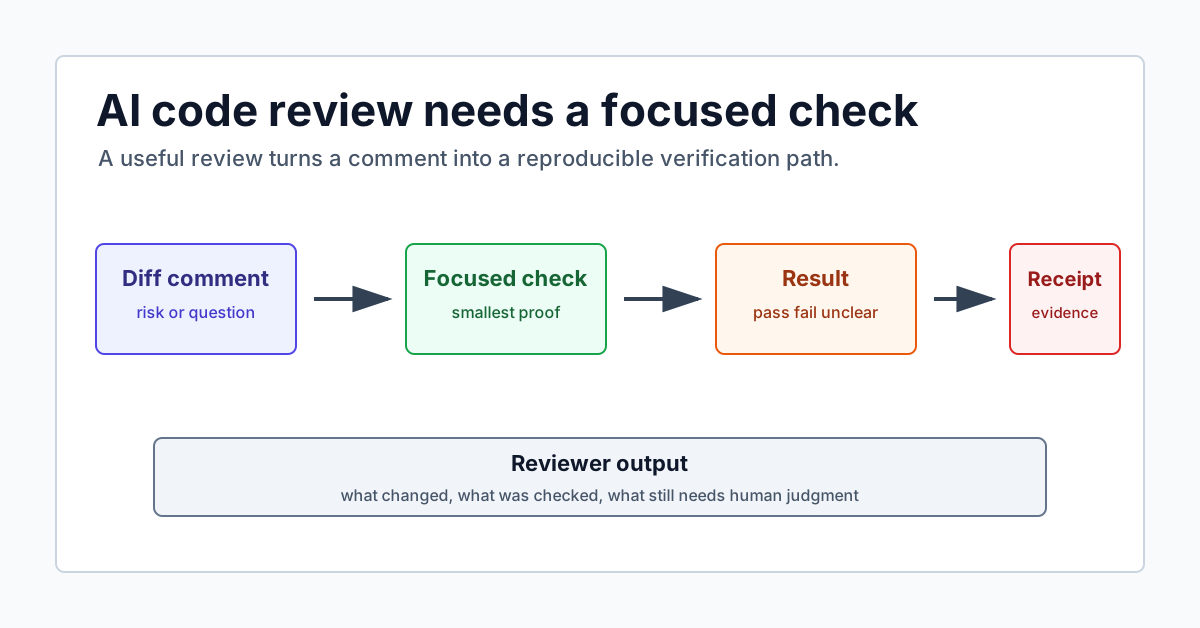
AI code review is useful when it reduces uncertainty. It is dangerous when it only creates a better-written explanation of an unchecked change.
That distinction matters more as coding agents move from “write a function” demos into real repositories. Once an agent can inspect a pull request, comment on a diff, run commands, or suggest a patch, the scarce skill is no longer only whether the model can notice a bug. The scarce skill is designing the loop around the review so a human can trust the result without becoming the hidden test harness.
The common failure mode is easy to miss because it sounds productive. An agent reads the diff, explains the intent, lists a few risks, maybe leaves review comments, and the output looks professional. But a review comment is still a hypothesis about behavior. It may be directionally useful and still wrong in the current repo. The real system gets the vote.
I started thinking about this more sharply while looking at the public Codex code-review launch pattern and the comment layer around it. The interesting signal was not just “people want AI review.” The useful questions were operational: will it integrate with GitHub, editor, local CLI, and tests? Can it use repo-wide context instead of only the diff? Will it produce low-noise comments? Can it debug and verify, not only write a report? Those are not model-brand questions. They are workflow-design questions.
Review Is Not A Better Linter
A linter enforces known rules. A reviewer reasons about intent, surrounding context, risk, and missing checks. An AI reviewer can help with that, but only if the workflow forces it to stay connected to evidence.
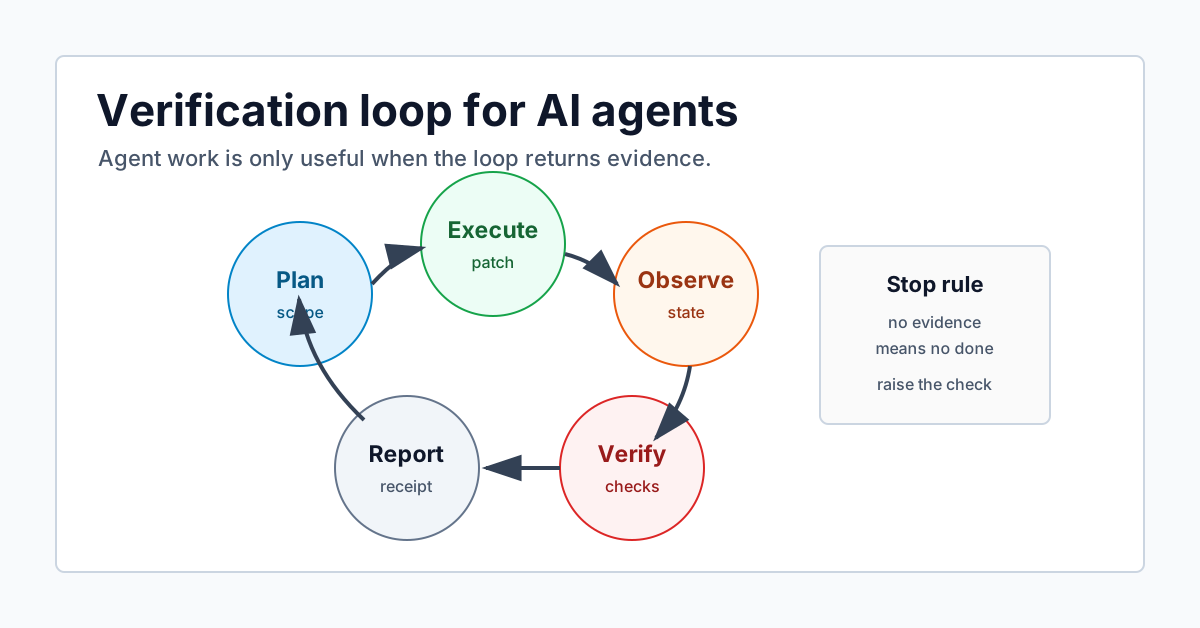
For agent-assisted review, I want the loop to end with concrete proof, not a confident paragraph:
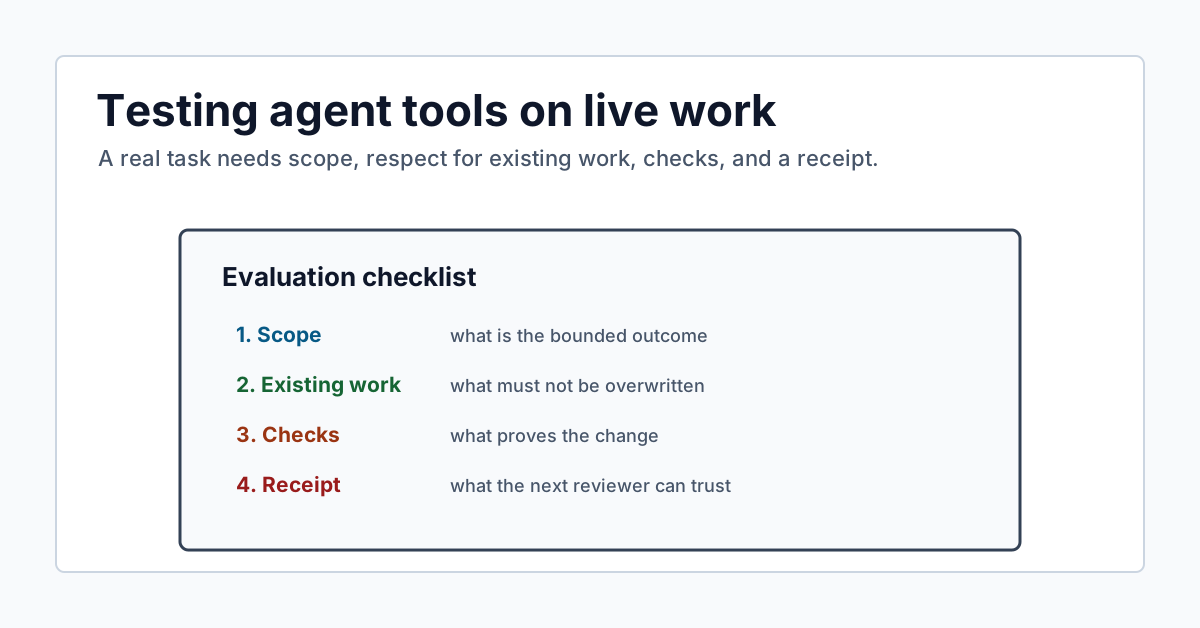
- the repo instructions or project rules the agent used
- the files and behavior the review actually covered
- a focused test, typecheck, build, or smoke command where feasible
- the fix path when the first review found a real issue
- a short boundary note about what was not verified
This is the difference between “the agent says this looks risky” and “the agent found the risky path, proposed the smallest fix, ran the relevant check, and left a reviewer with a smaller decision.”
The Boundary Where Agents Fail
AI often fails at the boundary between text and reality. It can describe an API that existed in training data but not in the current dependency. It can miss a configuration rule that lives outside the diff. It can assume a happy path because the code reads cleanly. It can generate review comments that are syntactically plausible but too noisy for a real team to tolerate.
None of those failures are solved by asking for a more polished answer. They are solved by moving the agent through a verification loop.
The practical question is not only, “does this look right?” It is:
- What would prove this is right?
- What is the cheapest check we can run now?
- Which risk remains outside that check?
- What should the human decide, instead of re-investigating everything?
That changes the role of AI review. The agent is not a source of authority. It is a reducer of uncertainty.
A Useful Review Closeout
A strong AI code-review closeout should be boring. It should say what changed, what was checked, what failed or passed, and where the review stopped.
For a small copy or docs change, the strongest affordable check may be a content linter or route build. For a backend behavior change, it may be a focused unit test plus a typecheck. For an auth, billing, deployment, or user-visible flow, a text-only review is not enough; the loop should climb toward integration or smoke evidence.
The point is not to run every possible test on every diff. That creates theater. The point is to match the verification level to the risk and name the remaining uncertainty plainly.
This also keeps the human role cleaner. Without a verification loop, the human becomes the loop: rereading transcripts, guessing what commands ran, checking whether the agent respected repo rules, and deciding whether “done” means anything. With a loop, the human reviews a compact proof trail and makes the decision that still requires judgment.
The AI Engineer Shift
This is where I think the AI Engineer role is moving.
The weaker version is: “I use agents to write code faster.”
The stronger version is: “I build the harness where agent output becomes inspectable, testable, and safe enough to delegate.”
That harness includes repo context, project instructions, review gates, command evidence, follow-up fix loops, and a human decision surface that is smaller instead of noisier.
AI code review is not valuable because it adds another voice to the pull request. It is valuable when it reduces the number of unknowns a human has to carry.
The standard I want is simple: do not close an AI review with only an opinion. Close it with the evidence that made the opinion cheaper to trust.
Reader next step
Keep reading before switching into hiring mode.
Related posts and tags are the natural continuation. About gives the profile context, and Projects has a few implementation notes.