The next agent wave is about control planes
Useful agent systems need routing, state, and operator visibility more than another chat box.
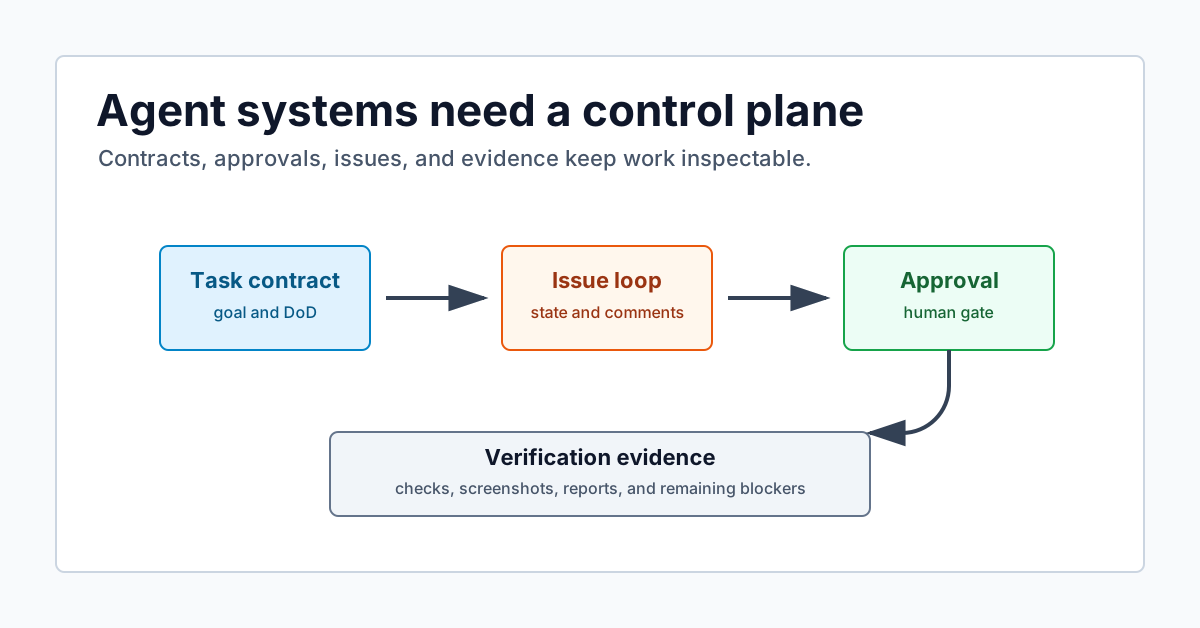
The next useful layer for agents is not a smarter chat window. It is a control plane.
That was my main takeaway after running Paperclip on real work. The interesting part was not another prompt box or a more dramatic agent demo. It was the operating structure around the work: goals, roles, issues, approvals, execution loops, and responsibility boundaries.
Chat is a good interface for a single exchange. It is a weak surface for long-running work because the state gets spread across messages, tools, branches, dashboards, memories, and tracker comments. After a few handoffs, it becomes hard to tell whether the agent is following the current plan or an older version of it.
That is why the control plane matters. It does not need to replace the coding tool, the tracker, or the chat interface. Its job is to keep the work steerable.
A minimum agent control plane should answer a few practical questions:
- What is the current task?
- Who or what owns the result?
- What counts as done?
- Which files, repos, or systems are in scope?
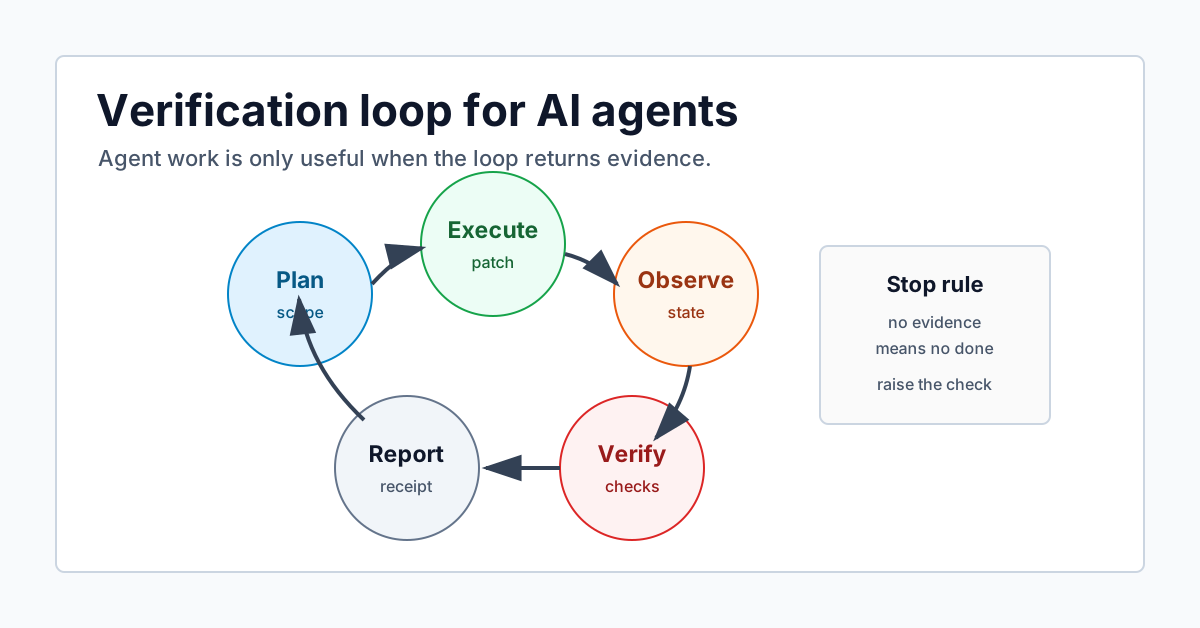
- What verification is required?
- What has already been approved?
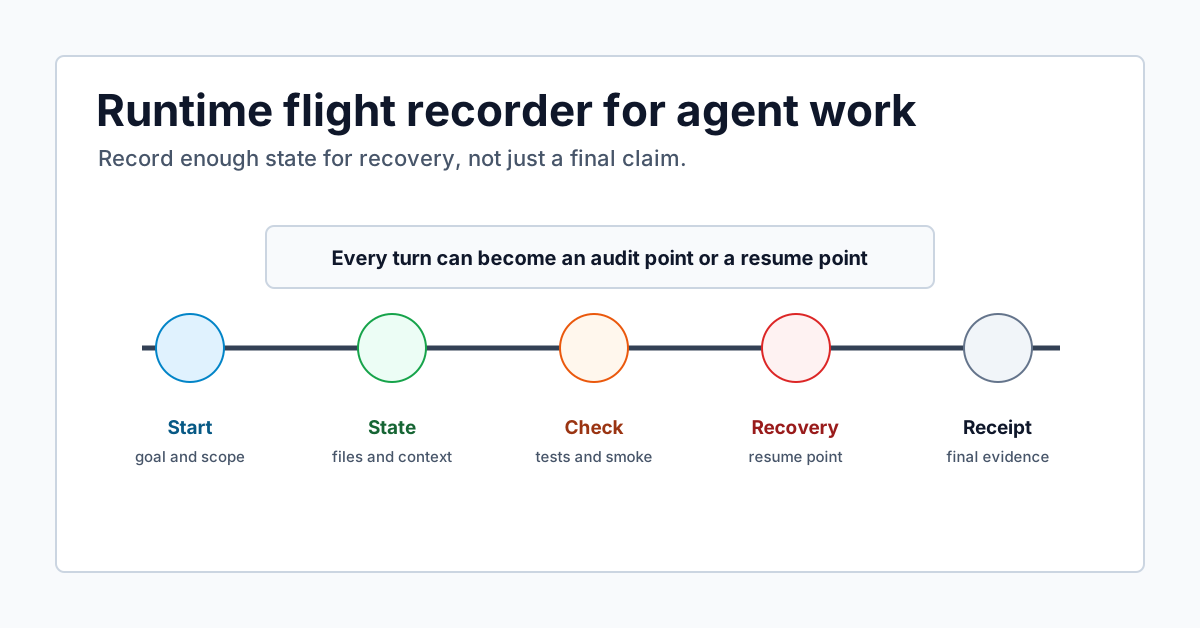
- Where is the latest evidence?
- How does another operator interrupt or resume the work?
Without those answers, agent work becomes a performance inside a chat log. It may produce output, but the operator has to reconstruct state from conversation. That is acceptable for exploration. It is weak for delivery.
The control-plane idea also prevents a common mistake: treating every surface as a competing source of truth. A board is good for scanning. A dashboard is good for status. A chat thread is good for interaction. A commit is good for source changes. None of those automatically owns the task contract. The control plane should make the canonical task visible and let the other surfaces become projections.
This is also a product design problem. If the operator has to inspect five places to understand whether work is active, blocked, approved, or done, the system has already leaked too much state. A control plane should make the important state boring to find.
This is where agent systems start to look less like “AI assistant” products and more like operating systems for work. The valuable layer is not only generation. It is routing, state, approvals, recovery, verification, and budget control.
The budget point matters. Agent workflows can create cost in several ways: API calls, human attention, context drift, review load, and wrong-path execution. A control plane does not remove those costs, but it makes them observable enough to manage. If the agent is blocked, repeating itself, or working outside scope, the operator should see that before the session becomes a long artifact nobody wants to audit.
Paperclip stood out to me because it pointed toward this direction. The broader lesson is not that one tool solves execution design by itself. It is that the product category is moving from isolated agent performance toward steerable work systems.
The practical check is simple. If an agent is doing real work, can I see:
- the active objective;
- the accepted scope;
- the current owner;
- the next gate;
- the latest evidence;
- the safe stop button?
If not, I do not yet have a control plane. I have a chat interface with extra responsibility hidden inside it.
That may be enough for a demo. It is not enough for a team that wants agents to touch real systems.
The lesson I take from Paperclip is not that every team needs a large orchestration platform on day one. It is that agent products should expose the operating layer explicitly once the work becomes multi-step, multi-person, or recoverable across sessions.
Reader next step
Keep reading before switching into hiring mode.
Related posts and tags are the natural continuation. About gives the profile context, and Projects has a few implementation notes.