AI human distillation
A short note on using AI to compress human context without sanding off judgment, voice, and uncertainty.
AI is good at compression. That is useful, but compression is not the same as understanding.
The uncomfortable question is whether a person can be compressed into a reusable package of decision patterns, writing habits, context packaging, and response behavior. Not as a novelty chatbot. As a working approximation that can pick up a familiar class of tasks and act in a way that feels recognizably like the original operator.
That sounds abstract until you look at the daily artifacts many disciplined people already produce: retrospectives, notes, prompts, decision logs, pull request comments, call summaries, project briefs, and long chat histories. Those artifacts are helpful because they make work legible to other people. They also make the person easier to model.
The easiest people to distill may be the people who have already done a lot of the compression work themselves.
What Gets Compressed
When a person talks through a messy decision, the valuable material is not only the final answer. It is the pressure behind the answer:
- what they noticed first
- what they ignored
- which constraints mattered
- what tradeoffs felt unacceptable
- how they changed language for a specific audience
- where confidence was low
- when they stopped optimizing and chose the boring route
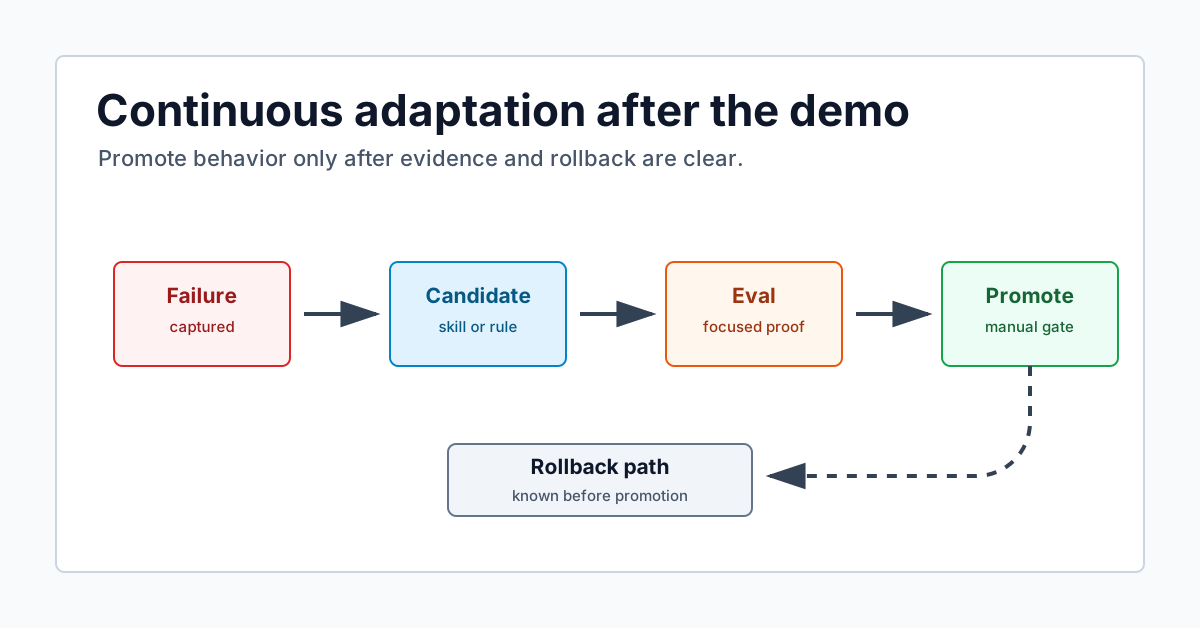
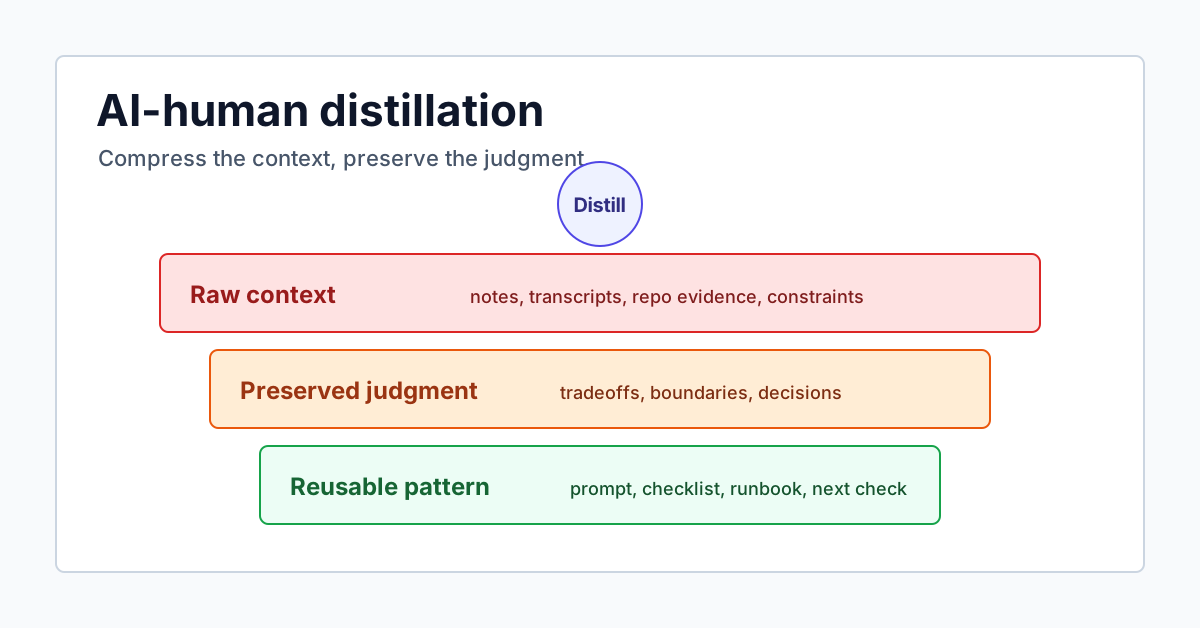
Good AI-human distillation should preserve that pressure. It should turn raw notes, calls, and chat fragments into a reusable artifact without pretending the uncertainty disappeared.
The weak version of distillation produces a clean summary. The stronger version preserves enough of the decision shape that the next reader can reuse the judgment, not just the conclusion.
For me, a trustworthy distilled artifact usually has three layers:
- the decision or takeaway in plain language
- the source context that supports it
- the unresolved questions that should not be flattened into certainty
If one of those layers is missing, the artifact may still read well, but it becomes less useful for serious work.
The Risk Of Over-Cleaning
The main failure mode is not messy output. It is over-clean output.
A model can make a person’s thinking look more generic, more confident, and more polished than it really was. That can be tempting, especially for public writing or executive summaries. But it weakens the signal when the original value came from judgment under pressure.
The rough edges often explain the decision. A hesitation may show that the person was working near the boundary of their knowledge. A repeated phrase may reveal what they consider important. A rejected option may matter more than the chosen path because it shows the constraint that ruled out an attractive but wrong solution.
If the distillation removes all of that, it becomes a synthetic article. Useful sometimes, but not the same thing as preserved human judgment.
This is especially important for founder notes, engineering logs, personal operating systems, and agent memory. In those contexts, the goal is not to make every input sound like a finished essay. The goal is to make human context reusable without sanding off the parts that made it human.
Anti-Distillation
This is why the opposite question interests me as much as distillation: what parts of a person’s value resist clean compression?
I do not mean secrecy. I do not mean becoming vague on purpose or refusing to document work. I mean identifying the layers that do not survive as a simple pattern replay:
- judgment under ambiguity
- taste in what to ignore
- timing
- trust
- responsibility
- the ability to reframe the situation instead of operating inside the given frame
Those layers may become more important, not less, as models get better at copying visible patterns.
If a person’s work can be compressed into a few megabytes and replayed reliably, a meaningful part of that role is under pressure. If it cannot, the part that resists compression deserves more careful study.
A Better Distillation Standard
The practical standard I want is simple: distill for reuse, not for polish.
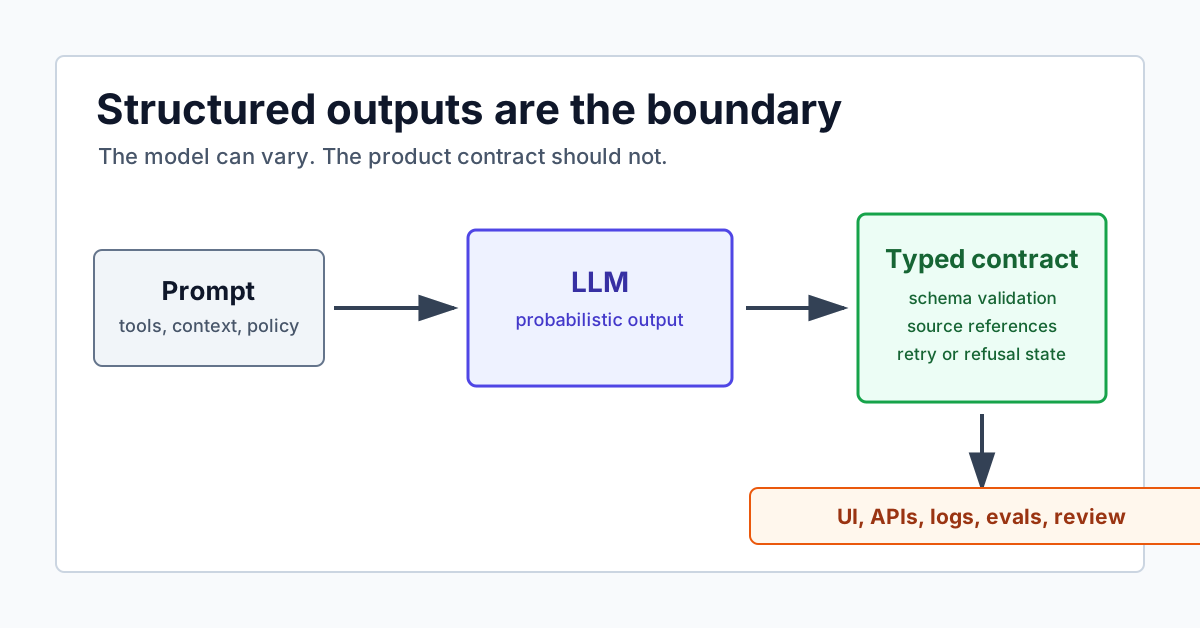
That means keeping source pointers close to the summary. It means separating what was actually said from what the model inferred. It means preserving uncertainty when uncertainty affected the decision. It means translating raw context into public language when needed, but not pretending the backstage reasoning was cleaner than it was.
AI-human distillation is not only a writing workflow. It is becoming part of how expertise is packaged, replayed, delegated, and protected.
The strategic question is no longer only whether models can write code or summarize meetings. It is what remains valuable once decision patterns, writing habits, and context packaging become portable.
That boundary is where the interesting work starts.
Reader next step
Keep reading before switching into hiring mode.
Related posts and tags are the natural continuation. About gives the profile context, and Projects has a few implementation notes.